Monday, May 28, 2012

How To Tweeze Eyebrows


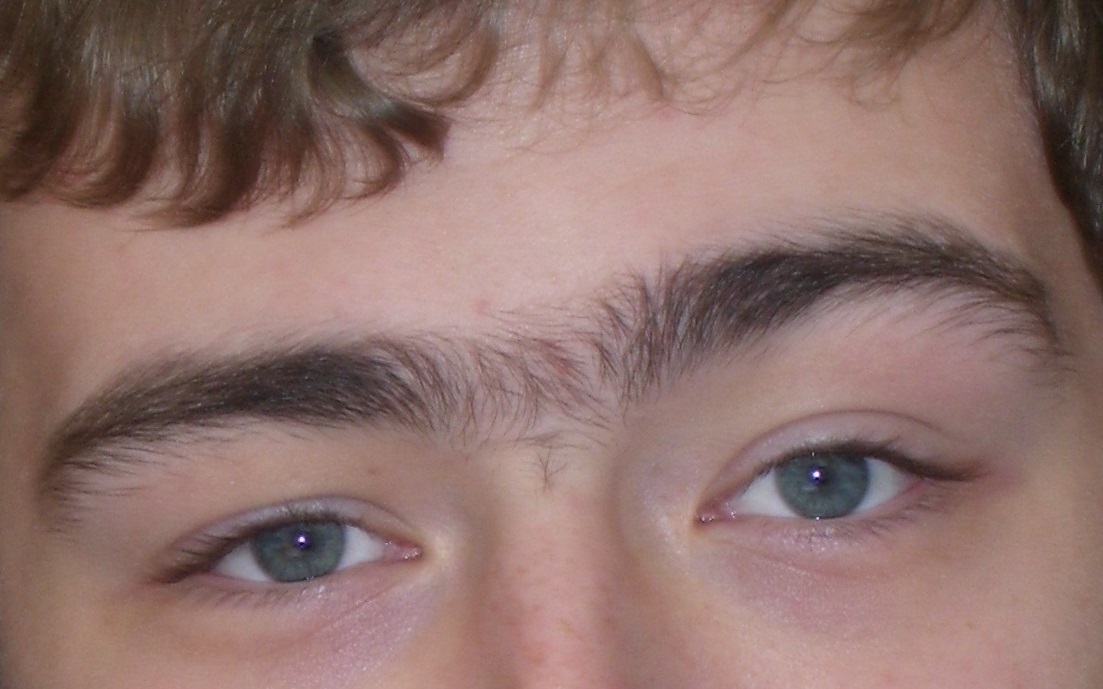
As a professional stylist, I've encountered hundreds of male clients who sported a "unibrow".  Based on my 13 years of professional experience, I've discovered two interesting facts: (1) Most men with a unibrow would like to take care of the problem, and (2) Many of these men are too self-conscious to have their brows waxed or tweezed in a salon.

If you're a man who secretly longs to have two eyebrows instead of one, here's a helpful article which will teach you the basics of tweezing so that you can take care of the problem discretely, in the comfort of your own home: How To Tweeze Eyebrows

Friday, May 18, 2012

Don't Miss the World Beard and Moustache Championships!


If you're a fan of facial hair, the annual World Beard and Moustache Championships is like dying and going to hair heaven.  Since the 2012 Beard Team USA championships are coming up on November 11 at the Clark County Government Center Amphitheater in Las Vegas, here is a brief overview of the World Beard and Moustache Championships.

History

The championships date back to 1990, when the event was organized in a small village in the Black Forest of Germany.  Since 1995, the championships have been held every two years.  These events have been held in Trondheim, Norway (1997), Ystad, Sweden (1999), Germany (2001), Carson City, Nevada (2003), Berlin (2005), London (2007), and Anchorage, Alaska (2009).

Categories

Just about every type of facial hair style is represented at the world championships.  Some of the categories include: natural mustache, English mustache, Hungarian mustache, Dali mustache, Imperial mustache, freestyle, Fu Manchu, natural goatee, and several others.

If you're going to Las Vegas, here are some things to remember:

-the competition is open to everyone, regardless of nationality
-the competition will feature 17 different categories
-registration is $40
-spectator admission cost is $10
-more details can be found at BeardTeamUSA.org

Wednesday, May 9, 2012

Industry Icon and True Man of Style Vidal Sassoon Dead at 84


Those of us in the beauty industry have lost a legend today with the passing of Vidal Sassoon, the pioneer who single-handedly brought the art of hair out of the dark ages.  Sassoon, who was 84, died of natural causes in his home in Los Angeles, surrounded by family.  Sassoon devoted seven decades of his life to the industry and became a household name so recognizable that some people may be surprised to learn that he was a real human being, and not some advertising icon like Aunt Jemima or Betty Crocker.  This just shows how iconic Vidal was- millions of people around the world know the name, even if they didn't know the man.

Those of us who did know Sassoon, either directly or indirectly, realize that the world has lost an artist on par with the likes of Andy Warhol or Jackson Pollock.  Vidal revolutionized the art of hairstyling to such an extent that we may not even have the world "hairstylist" in our lexicon without his contributions.  Before Sassoon, the concept of "wash and wear" hair did not exist.  He was the visionary who turned hairstyling into a distinctive and separate art form from hairdressing, which is an art characterized by elaborate swirls and bobby pins and rollers and teasing and lacquering the hair with spray.  Sassoon's work was a radical departure from the age-old art of hairdressing; Sassoon taught the world about short geometric cuts, performed with such incredible precision that the hair would fall perfectly into place, without the need for "hairdressing" tools like irons and pins.  This transition is no less significant (and perhaps even more so) than the abstract expressionism or pop art movements, which also took place during Sassoon's prime.


Sassoon's contributions may have had an even greater impact than the contributions made by Warhol or Pollock.  In the 1960s, Americans changed their perception about women as more and more females assumed control of their lives by entering the workforce.  This shift in gender equality demanded hairstyles which would not require a two-hour visit to a beauty salon.  Vidal Sassoon was there to liberate women from the "oppressive" hairstyles of the past by perfecting the types of styles which we've come to know as "wash and wear"- many of these Sassoon-inspired looks are still among the most popular hairstyles requested today, nearly half a century after Sassoon created them!

In other words, every woman who doesn't spend an ungodly amount of time in the bathroom every morning primping and styling owes a tremendous debt of gratitude to Vidal Sassoon.  Every hairstylist who designs haircuts based on a woman's facial features and bone structure owes a debt of gratitude to Vidal Sassoon as well, because he was the pioneer who taught us how to customize a look for a client, rather than pinning up the hair in a bland French twist or a generic beehive, as most of his contemporaries did.  And every stylist who prides himself on cutting hair with laser-like precision owes a debt of gratitude to Sassoon, because his techniques are still being taught to cosmetology students today.


Sassoon was also a driving force when it came to the consumer aspect of hairstyling, which is not surprising since most of us first heard of his name through blowdryers, shampoo, hairspray, and other beauty products which bore his name on the label.  Up until the 1980s, very few hairstylists were known by name outside of the beauty industry, and even fewer had their names emblazoned on products which could be bought in virtually any drugstore or supermarket.  The company's slogan, "If you don't look good, we don't look good", became almost as iconic as Vidal himself.  Prior to the 1980s, it was nearly impossible for a woman to walk into a store and purchase a blowdryer or curling iron right from the shelf, or buy a shampoo which was formulated to be "salon-inspired".  Before Sassoon, the typical woman would have to go to the local beauty parlor to have her hair dried with a blowdryer, or to buy a shampoo that wasn't Breck or Prell or Suave.  Vidal Sassoon paved the way for Jose Eber, Nick Arrojo, Chaz Dean, and other "superstar stylists" whose names grace various haircare products.

Today, we erroneously credit Vidal Sassoon as being the inventor of iconic shorter-length cuts such as the bob or the pixie.  Although Sassoon didn't invent these cuts, many of us think he did, and this is a tribute to his influence, much the way we tend to think that McDonald's invented the hamburger or that Coca-Cola invented soda pop.  The bob was invented in the early 20th century and by the 1920s it was the go-to look for flappers and actresses- in fact, the fashion correspondent of The Times stated, in 1922, that bobbed hair was passé.  It was Vidal Sassoon who resurrected this old-time hairstyle and re-invented it for a new generation.  Nearly all modern bobs resemble the variations developed by Sassoon, rather than the bob that was popular in the Roaring Twenties.  Sassoon is also given credit for developing the pixie, which he designed for Mia Farrow in the 1960s.  However, barbers in Italy had been performing this cut on women since the early 1950s (Remember the 1953 Audrey Hepburn film Roman Holiday?).  Sassoon may not have invented these particular styles, but he sure as hell perfected them to such an extent that we assume he was the originator.  That, my friends, is proof of his genius and ability.

Rest in peace, Vidal.  We will miss you.


Wednesday, April 18, 2012

How to tell if you're going bald....

Going bald is bad enough, but even worse are those pitiable gentlemen among us who are going bald but like to pretend that they are not.  These are the fellows with the comb-over hairstyle; a monstrosity of grooming where hair from one side of the head is dragged across the skull, in a pathetic attempt to camouflage an ever-growing expanse of scalp.  These poor men live every day of their lives in a state of denial, earning the jeers and laughter that comes their way.  In order to prevent one's self from becoming a laughingstock, a man must learn to identify the early warning signs of impending baldness.  Here is how to tell if you are going bald.

1. When you walk outside on a sunny day, you find that people have to shield their eyes around you in order to avoid the glare from your scalp.

2. You suddenly realize that a bottle of shampoo lasts much, much longer than it used to.

3. Your favorite hat doesn't quite fit the way that it used to.

4. When you look into the drain after the shower, you think that you are looking at a drowned rat.

5. Your forehead seems to be growing in height every year.

6. When you drive in a convertible with the wind blowing through your hair, you feel a little chillier than you used to.

7. When you are around friends, they have a sudden urge to bowl.

8. When you are around friends, they have a sudden urge for watermelon.

9. When you are around friends, they have a sudden urge for hard-boiled eggs.

10. When you raise your head after falling asleep on a leather couch, you hear a sound like someone peeling the backing off of a Fruit Roll-Up.

If you happen to recognize any of the above signs, then it just may be time to admit that you are losing your hair.  But fear not, my balding friend.  The best thing a man in your situation can do is to accept Mother Nature's kick-in-the-pants with grace and dignity, instead of trying to convince the world that you are as hairy as you were back in high school.  After all, lots of women find bald to be sexy.  Of course, I can't seem to think of any off the top of my head, but I'm sure they must exist.  But then again, they are doing some amazing things with toupees and hair transplant surgery these days.

(Editor's Note: "How To Tell If You're Going Bald" appears courtesy of Gus Muldoon)

Thursday, April 12, 2012

How to Prevent Post-Shave Itching

Itching is a common occurrence for many people after shaving.  This itching is often the result of millions of microscopic abrasions on the surface of the epidermis, or outermost layer of the skin.  Left unattended, these micro-abrasions will often heal within a day or two, although the itching may last longer if the skin is irritated by certain ingredients found in low-quality shaving creams, soaps, gels, and lotions.

Fortunately, it is easy to prevent post-shave itching.  The first step is invest in higher-quality shaving supplies.  Cheap disposable razors will result in a greater amount of skin abrasions, which will result in more itching.  Low-quality shaving creams can also intensify the itching sensation.  Shaving creams and gels containing aloe, dimethicone, silicone, and other natural and synthetic emolients (ingredients which soften skin) will help reduce itching and soothe the skin while shaving.  Dimethicone and silicone also help the razor glide over the skin more easily, reducing abrasions and irritation.

The next step is to practice proper shaving technique.  Using warm water will soften the hair, making shaving easier.  Allow the shaving cream to sit on the skin for a minute or two prior to shaving; this will also help soften the hair.  Rinse the blade after each pass with the razor, since a clogged razor can lead to cuts and nicks.  It is important to shave "with" rather than "against" the grain of the hair (the direction in which the hair grows).  While shaving "against the grain" will result in a closer shave, it will also increase the possibility of cuts, nicks, abrasions, itching, and ingrown hairs.  Stretching the skin taut with your free hand while shaving will also help minimize itching and irritation.  If the itching still persists, one easy trick is use an unscented stick deodorant on the afflicted area.  The aluminum oxide found in most deodorants will soothe the skin and absorb excess moisture on the surface of the skin, which will reduce irritation, redness, and itching.

Finally, it is essential to practice good basic skincare.  Healthy skin is much more resistant to micro-abrasions than dry or dehydrated skin.  Proper skincare is easily achieved by drinking plenty of water, using a moisturizing lotion daily, and exfoliating the skin a few times per month to remove dead skin cells.

By investing in better quality shaving products, practicing proper shaving technique, and practicing proper skin maintenance, post-shave itching and burning will become a thing of the past.

Monday, March 26, 2012

Haircoloring Tips For Men

While many women openly discuss coloring their hair, men tend to be more discreet. Some men may consider coloring their hair to be effeminate, while others are simply afraid to acknowledge the fact that they are getting older. Even though many young men of today like to experiment with haircolor, the overwhelming majority of men who decide to color their hair do so in an attempt to cover and conceal gray hair. If this is your reason for experimenting with haircolor, here are a few tips to keep in mind:


1. Don't go too dark. Nothing looks more ridiculous on a man than a bad dye job. Very few men over the age of forty have black hair, so going too dark is a sure way to look like you dyed you hair in your own bathroom with a box of Just For Men.

2. Consider blending your gray, rather than covering it. In order to cover gray hair, you will need a permanent dye, which can be quite messy. Semi-permanent dyes blend in gray, allowing you to gradually darken your hair over time, which looks more natural. Best of all, semi-permanent dye doesn't take as long to process and it washes off of your skin easier.

3. Wear gloves. Some dyes don't come off of the skin very easily, and it is much easier to put on a pair of latex disposable gloves than to explain to everyone why your hands are covered in brown blotches.

4. Protect your hairline. If you are trying to pull off a natural look, the last thing you want is haircolor stains on your forehead, ears, and other parts of your skin. In order to prevent staining, coat the skin you wish to protect with a thin layer of petroleum jelly or skin cream.

5. Protect your clothing. Even temporary dyes can permanently ruin clothing. When coloring your hair, wear clothing that you don't mind getting stained. Also, if you rinse out your hair in the shower, make sure you don't use a white towel to dry your hair with. Your wife or girlfriend will be very upset.

6. Go to a professional. Sometimes it's just easier to pay a professional to do the job. They are trained to know what shades look best, and which shades to avoid. Best of all, there's no mess to clean up afterwards.

7. Maintenance. Coloring your hair is not a one-time thing; it requires upkeep. All dyes will fade a little over time, so the hair should be re-colored every six weeks or so. This will also prevent your "roots" from showing.

8. Know the limits of what your dye can do. Don't go by the pictures on the box. For example, someone with naturally dark hair will never be able to dye their hair blonde using a box color. The dye simply isn't strong enough, and you will be left with orange hair. Even the strongest professional dyes can only lighten hair a few shades. In order to lighten the hair drastically, you will need bleach.

9. Use the right shampoos and conditioners. Hair that has been dyed is considered chemically treated, therefore it will require different products. Using shampoos that are too harsh will strip the color from your hair.

10. Timing is everything. Always follow the processing time listed in the directions. Leaving the dye on too long may cause the color to become too dark, and not leaving the color on long enough may cause premature fading.
Related Posts Plugin for WordPress, Blogger...